Launch and grow the schools families are asking for
Explore the opportunity
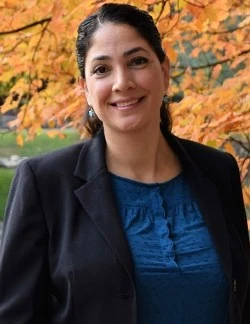
Introducing our founding CEO
Stephanie Saroki de García
More than 25 years of experience expanding opportunity for children and families.
The Opportunity
A generational shift is underway in how America funds education.
State scholarship and tax credit programs are expanding. The Federal Scholarship Tax Credit (FSTC) opens a national channel of credit-eligible giving beginning in January 2027. Family demand for new school models is accelerating in red, blue, and purple states alike. The door is open in more states than at any point in modern history.
But in nearly every market, the same constraint persists. The bottleneck is not demand. The bottleneck is the lack of a coordinated ecosystem to build a supply of great affordable private schools.
Capital Gap
Lenders historically have not invested in early-stage schools without significant personal guarantees.
Facility Friction
Zoning, life-safety codes, and retrofit costs often exceed $250K per site.
Disparate Efforts
No single entity connects philanthropy to diverse models with coordinated tools for growth.
The charter sector took nearly fifteen years to build the infrastructure that produced growth funds, facility finance vehicles, and incubator programs. Private schools have had no equivalent. The Private School Growth Fund (PSGF) applies those lessons with a state-first investment approach designed to prove the model and enable its replication.
Built for the Long Game
Policy opens doors. It does not build schools.
PSGF is launching during a time of significant policy change across America, change that will continue in the years ahead. States will keep advancing school choice policies that give families the freedom to choose the best learning environment for their children, just as they will choose whether to participate in the Federal Scholarship Tax Credit. But our mission is to build for families.
Organizations that endure leverage policy to fuel their impact, yet they sustain and grow regardless of it. For more than 25 years, scholarship programs in Colorado have enabled tens of thousands of children to attend private schools without a state choice program, across administrations of every stripe. That is the posture PSGF takes: invest where family demand is real, launch schools that stand on their own economics, and welcome every dollar that policy adds without depending on it.
Families deserve great schools of all kinds, aligned to their values and the needs of their children.
Traditional public and charter schools have access to financial vehicles that let them build and expand. PSGF exists to do the same for the private school sector. This work requires an ecosystem where every kind of school can be excellent.
The Moment
The demand is not theoretical. It is measurable, growing, and underserved.
In red, blue, and purple states alike, families are gaining new ways to choose the schools that fit their children. As of 2025, 35 states plus DC and Puerto Rico have at least one private school choice program, and roughly 1.3 million students are now enrolled in one, a 25% jump in a single year. Eighteen states have moved to universal eligibility.1
The Federal Scholarship Tax Credit, effective January 2027, could direct up to $24 billion a year into K-12 scholarships nationwide at full participation.2 Because the credit follows the donor rather than the state, contributors anywhere in the country can direct credit-eligible gifts to Scholarship Granting Organizations in participating states. Capital will flow to the states that build the supply.
Wherever families want more values-aligned schools, we will build the capacity to meet their needs.
How We Get There
Four investments that move schools from concept to open doors.
The charter sector has the Charter School Growth Fund, which has deployed over $550M and helped create hundreds of thousands of seats nationally. Private schools have had no equivalent. PSGF is that fund.
Build the Pipeline
Target investment where family demand is real and unit economics work. Map the communities where scholarship demand and facility availability intersect. Underwrite to evidence, not optimism, and never to a single policy staying in place.
Deploy Staged Capital
Planning grants, startup funding, flexible facility financing. Capital sized to how school costs actually unfold, especially in years zero through three, tied to milestones at every stage.
Invest in Durability
Enrollment and family engagement support. Shared services and back-office systems. Financial discipline and governance coaching. Schools built to survive the fragile early years and the political weather, with stable enrollment and strong foundations.
Remove Friction
Navigate facility approval pathways, code and compliance requirements, and regulatory misfit for small or innovative models. Clear the path so school founders can focus on students.
Who We Are
Get in Touch
Contact Us
Have a question about PSGF, our work, or ways to collaborate? Send us a message using the form below.